In the current episode of the great radio program Speaking of Faith, Dr. David Hilfiker, co-founder of Christ House and Joseph's House in Washington, DC and teacher at the Servant Leadership School "tells the story of how concentrated poverty and racial isolation came to be in cities across America". If you missed it on the radio you can find out much about the program on the Speaking of Faith website and/or subscribe to their podcast.
The Servant Leadership School has a new website which will list their fall classes soon. I have taken a number of classes there over the years and have found them very inspiring and nourishing, please check them out.
Sunday, August 27, 2006
Thursday, August 24, 2006
Praying Prisoner
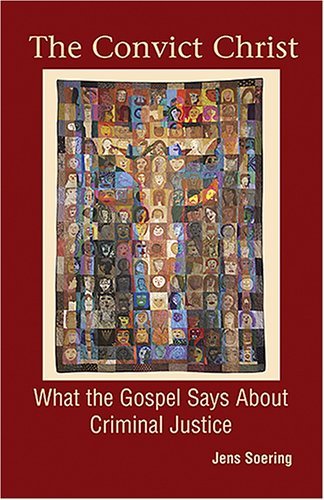
My friend and mentor Richard Busch has been a supporter of Jens Soering, a convict serving two life sentences in a Virginia prison. While behind bars Jens has written a number of interesting books on faith, justice and contemplative prayer. Here's a list of his books:
The Convict Christ: What the Gospel says about Criminal Justice
The Way of the Prisoner: Breaking the Chains of Self through Centering Prayer and Centering Practice
An Expensive Way to Make Bad People Worse: An Essay on Prison Reform from an Insider’s Perspective
There's a review of The Convict Christ, by Frederic and Mary Ann Brussat at Spirituality and Practice.
If you are interested in Jens' case (he is seeking parole) please visit Jens' website: http://www.jenssoering.com/
"Lord Jesus, for our sake you were condemned as a criminal:
Visit our jails and prisons with your pity and judgment.
Remember all prisoners, and bring the guilty to repentance
and amendment of life according to your will, and give them
hope for their future. When any are held unjustly, bring them
release; forgive us, and teach us to improve our justice.
Remember those who work in these institutions; keep them
humane and compassionate; and save them from becoming
brutal or callous. And since what we do for those in prison,
O Lord, we do for you, constrain us to improve their lot. All
this we ask for your mercy’s sake. Amen. "
Book of Common Prayer, page 826
Tuesday, August 22, 2006
The Church not inclusive?
Below is an excerpt from a recent interview with The Archbishop of Canterbury Rowan Williams,
Q: "Unity in the Church - worldwide - is to you a means of coming closer to the truth. As you put it, 'If we don't stay together, 'we are only following our own local denomination or our personal preferences. Where then do you draw the line? How far can unity be stretched within the boundaries of still being based on the Bible? In reply to this question Williams starts off with a rebuke of those who argue it is high time the Church accepted gay relationships.
A: Their ideal is the inclusive church. ,,I don't believe inclusion is a value in itself'', says the Archbishop. ,,Welcome is. We welcome people into the Church, we say: 'You can come in, and that decision will change you.' We don't say: 'Come in and we ask no questions.' I do believe conversion means conversion of habits, behaviours, ideas, emotions. The boundaries are determined by what it means to be loyal to Jesus Christ. That means to display in all things the mind of Christ. Paul is always saying this in his letters: Ethics is not a matter of a set of abstract rules, it is a matter of living the mind of Christ. That applies to sexual ethics; that is why fidelity is important in marriage. You reflect the loyalty of God in Christ. It also concerns the international arena. Christians will always have reconciliation as a priority and refuse to retaliate. By no means everything is negotiable for me. I would not be happy if someone said: Let us discuss the divinity of Christ. That to me seems so constituent of what the Church is.''
---------
I don't disagree with the Archbishops statement however we may be interpreting the word "inclusive" in different ways. According to Merriam-Webster:
"Comprehending stated limits or extremes" and "broad in orientation or scope as well as covering or intended to cover all items, costs, or services." Could not the word inclusive be one way of describing the humble submission all Christians are called to make before God in Christ Jesus? Gay and lesbian Christians that I know long to live out their Christian lives (inclusively) in community with others, couples seek fidelity and support for their commitment --- the kind of support our marriage liturgies ask the gathered community to give straight couples. When I use the word inclusive I certainly mean it in the sense that all are invited --- but I also use it to mean that all invited are called to be open to having our entire lives (inclusively) turned upside by the Holy Spirit's work. As the Archbishop says, "conversion means conversion of habits, behaviours, ideas, emotions." I believe that gay and lesbian persons are equally called to conversion. Yet what does that conversion look like? Does it mean that gay and lesbians are to be converted from being gay or lesbian to being straight? I don't think so perhaps for some that is possible but for many it is impossible. Gentile Christians were not asked to become Jews. However, conversion means that like straight persons, gay and lesbians persons are called upon to have their habits, behaviors, ideas and emotions transformed (inclusively). Our culture's saturation with sexuality, with promiscuity, infidelity is not limited to homosexuals but sadly includes heterosexuals as well. Are we not all gay and straight Christians alike called to conversion? Called to live out our full lives (inclusively) under the Lordship of Jesus Christ? Might that mean all of us must be open to change?
For more of the interview with Archbishop Rowan Williams please click here.
Q: "Unity in the Church - worldwide - is to you a means of coming closer to the truth. As you put it, 'If we don't stay together, 'we are only following our own local denomination or our personal preferences. Where then do you draw the line? How far can unity be stretched within the boundaries of still being based on the Bible? In reply to this question Williams starts off with a rebuke of those who argue it is high time the Church accepted gay relationships.
A: Their ideal is the inclusive church. ,,I don't believe inclusion is a value in itself'', says the Archbishop. ,,Welcome is. We welcome people into the Church, we say: 'You can come in, and that decision will change you.' We don't say: 'Come in and we ask no questions.' I do believe conversion means conversion of habits, behaviours, ideas, emotions. The boundaries are determined by what it means to be loyal to Jesus Christ. That means to display in all things the mind of Christ. Paul is always saying this in his letters: Ethics is not a matter of a set of abstract rules, it is a matter of living the mind of Christ. That applies to sexual ethics; that is why fidelity is important in marriage. You reflect the loyalty of God in Christ. It also concerns the international arena. Christians will always have reconciliation as a priority and refuse to retaliate. By no means everything is negotiable for me. I would not be happy if someone said: Let us discuss the divinity of Christ. That to me seems so constituent of what the Church is.''
---------
I don't disagree with the Archbishops statement however we may be interpreting the word "inclusive" in different ways. According to Merriam-Webster:
in·clu·sive
Pronunciation: in-'klü-siv, -zivFunction: adjective1 : comprehending stated limits or extremes 2 a : broad in orientation or scope b : covering or intended to cover all items, costs, or services - in·clu·sive·ly adverb - in·clu·sive·ness noun
"Comprehending stated limits or extremes" and "broad in orientation or scope as well as covering or intended to cover all items, costs, or services." Could not the word inclusive be one way of describing the humble submission all Christians are called to make before God in Christ Jesus? Gay and lesbian Christians that I know long to live out their Christian lives (inclusively) in community with others, couples seek fidelity and support for their commitment --- the kind of support our marriage liturgies ask the gathered community to give straight couples. When I use the word inclusive I certainly mean it in the sense that all are invited --- but I also use it to mean that all invited are called to be open to having our entire lives (inclusively) turned upside by the Holy Spirit's work. As the Archbishop says, "conversion means conversion of habits, behaviours, ideas, emotions." I believe that gay and lesbian persons are equally called to conversion. Yet what does that conversion look like? Does it mean that gay and lesbians are to be converted from being gay or lesbian to being straight? I don't think so perhaps for some that is possible but for many it is impossible. Gentile Christians were not asked to become Jews. However, conversion means that like straight persons, gay and lesbians persons are called upon to have their habits, behaviors, ideas and emotions transformed (inclusively). Our culture's saturation with sexuality, with promiscuity, infidelity is not limited to homosexuals but sadly includes heterosexuals as well. Are we not all gay and straight Christians alike called to conversion? Called to live out our full lives (inclusively) under the Lordship of Jesus Christ? Might that mean all of us must be open to change?
For more of the interview with Archbishop Rowan Williams please click here.
Monday, August 21, 2006
Sunday School Teacher dumped for being female

While this story might seem outrageous, sadly many large mega-churches across the country have few women in leadership roles. I am a Christian today because of the numerous women in my life growing up who taught Sunday School, ran Vacation Bible School, led committee meetings, sat on the vestry, and served as Priests and Bishops. Thank God the Episcopal Church and other mainline churches welcome and support the ministry of women. Mary Lambert, the Episcopal Church Welcomes You!
http://www.cnn.com/2006/US/08/21/menonly.sundayschool.ap/index.html
The photo above is of Mary Lambert, who after teaching Sunday School for 54 years was dismissed for being female.
Subscribe to:
Posts (Atom)