Once upon a time, about ten years ago, a group of eager American college students visiting rural Tibet set out to visit an elderly monk who had been meditating in a cave for over 15 years. The students had been told that the monk would introduce them to a guide who could lead them to somewhere truly special. The guide, they were told, would lead them to another cave, but this other cave was not found on many map. In this secret cave, the students were told that the famous Milarepa, the first Tibetan to reach enlightenment, had meditated.
The students could hardly contain their excitement as they approached the monk's cave. One student suggested they could all end up on the cover of a Buddhist journal. Another student speculates that all of them could easily be accepted into graduate school with a story like this under their belts. At the entrance to the elderly monk's cave, the eager students were welcomed inside to sit by the holy man's fire, and to share a cup of tea and some potatoes he had cooked for breakfast. Time passed, and the impatient students ate potatoes and sipped tea. Eventually, through their translator, the students learned from the old monk that the guide was not able to join them that morning. The students were disappointed, but they thanked the elderly monk for his hospitality and left. Only years later did it occur to one of the students that the other cave really wasn't that important after all, and that the breakfast with the elderly monk was infinitely important on its own.
Today with people all around the world we come together in this sacred cave of sorts to celebrate Jesus of Nazareth’s birthday. Many scholars believe that the holy family if the birth stories are to be taken as fact likely found shelter in a cave in Bethlehem since caves were the customary place where animals would have been kept and if the new born baby was really placed in a manger, an animal feeding trough, then a cave makes sense.
We could go on at length about the significance of caves and our human ancestors emerging out of them, we could talk about cave paintings, and sacred rituals that take place in caves even to this day in some cultures. As interesting as that exploration and investigation might be --- what does Jesus’ birth, the son of Man, Jesus the savior, liberator, prophet, teacher, and king --- the eternal word/logos/reason of God, the second person of the Trinity made flesh --- what real difference does this make beyond a festive fun filled family holiday full of carols, good food and good cheer? What’s the big idea?
Well, theologians would call it the incarnation --- the divine taking on flesh. The incarnation though is not just about a single event long ago, but is about the elevation of human life for all time. As St. Athanasius of Alexandria wrote in the 300s, "God became man so that humanity (man) might become god."
So we need not head to Palestine to find a particular cave where X marks the spot: here is the "sacred cave" where you can experience the fruits of the incarnation. No, the truth of the incarnation is that there are many caves to be explored, an infinite number of places where we humans may discover the divine presence ---- the invitation is to seek the nativity, new life, everywhere among everyone most especially in the context of our actual daily lives.
As Dean Shaw quoted Meister Eckhart in her introduction to the cathedral Christmas concerts “What good is it that Christ was born 2,000 years ago if he is not born now in your heart?
St. Francis of Assisi who invented Christmas pageants by dressing up his hometown like the holy family --- seemed to understand that in order for us human beings to get the significance of the incarnation we long to somehow see, touch, and feel the divine presence --- we can’t just be told God abides with us --- we have to be shown. St. Francis told his followers --- preach the gospel, the good news at all times if you have to use words. Francis, our city’s patron, privileged the embodied word over the spoken --- whether it was his rebuilding of an abandoned church, standing naked before the questioning crowds, wandering through a battlefield to meet face to face with the supposed enemy of his people. The nativity --- the cave where Christ is born is not somewhere else, far away but within you, within us in the very fabric and context of our lives.
We often seem to refuse this gift --- the gift of the incarnation --- we would rather believe that God is somehow very far away --- difficult to reach, some place other than where we are. The ancients believed that if a person beheld God they would die. There is a privileging of the transcendent within the tradition, perhaps because to really appreciate the incarnation we have to let go of a certain kind of ambition, we have to accept life on life’s terms, we must deal with that difficult neighbor, we must deal with ourselves.
This Advent I’ve been reading and re-reading a poem by E.A. McLaughlin a poet, artist, and African American Episcopal priest who built the current church building of St. Cyprian’s Episcopal Church at the intersection of Lyon and Turk Streets in San Francisco and later served as a canon at Grace Cathedral but I’ve been told he never preached from this pulpit ---- here’s a portion of McLaughlin’s poem,
“Love” cries out for a human self, and waits for a response;
It remains but a theory, until given human expression.
A word is only an idea unless it’s acted out.
“Love” is a passive symbol, without embodiment.
So as we approach the cave, to discover the light of the world, may we be truly present and not anxious about getting some place else, or making some significant gain ---- let us simply appreciate the gift of love embodied in the eyes and actions of a newborn stranger.
What might life be like if we were always seeking Christ in one another, including our enemies, what might life be like if we lived fully with the conviction that Christ is within us? What fears would we let go of? What hopes would arise? What new possibilities could emerge? How might we welcome and care for the immigrants among us, how might we provide healthcare, shelter, education and food to those in the greatest need.
May we like Francis discover ways to act out the nativity --- not just in pageants but also by walking across the battlefields of our daily lives, finding ways large and small to embody love.
Christmas is about love being given a human self, not just in a baby born in a manger but also in our own dark and damp caves. In time we may discover there a fire has been lit, and that tea and potatoes are waiting for us.
_____________________________________
A personal note:
At the end of December, I will leave the staff at Grace Cathedral to focus my work at St. Cyprian's Episcopal Church in San Francisco whose congregation leadership have called me to serve as Priest-in-Charge and in time as Vicar. I will be part-time there, and seeking employment in the surrounding neighborhoods. I am very grateful for the four years I have been at Grace Cathedral, and am excited about the adventure ahead. One of the sadness about leaving Grace for me is not having the opportunity to work closely with the new Dean, Dr. Jane Shaw whom I appreciate and admire very much. However, the histories of the cathedral and St. Cyprian's are intertwined and my hope is in the years ahead these links will continue to be sources of mutual joy, growth and inspiration. Please keep us all in your prayers. Merry Christmas!
Saturday, December 25, 2010
Sunday, November 21, 2010
Christ the King/Reign of Christ
Today in churches all over the world folk will be celebrating Christ the King, some places will have long processions, triumphant hymns, and lots of hoopla. At St. Cyprian's we'll be sharing a Litany of Resistance as published in "Jesus for President" by Shane Claiborne & Chris Haw which was created with the help of their friends Jim Loney (CPT Reservist) and Brian Walsh (activist theologian). When I look at the litany I am reminded of the pledge of nonviolence written by MLK and signed by those who marched with him in 1963.
- As you prepare to march meditate on the life and teachings of Jesus
- Remember the nonviolent movement seeks justice and reconciliation - not victory.
- Walk and talk in the manner of love; for God is love.
- Pray daily to be used by God that all men and women might be free.
- Sacrifice personal wishes that all might be free.
- Observe with friend and foes the ordinary rules of courtesy.
- Perform regular service for others and the world.
- Refrain from violence of fist, tongue and heart.
- Strive to be in good spiritual and bodily health.
- Follow the directions of the movement leaders and of the captains on demonstrations.
Print Name ______________________________
Signature _______________________________
There's some interesting discussion of Christ the King/Reign of Christ over at Episcopal Cafe as well. What does this day mean to you?
As I was getting ready to head out the door this morning, Pandora Radio played a
Dar Williams song that somehow fit this day, "The Great Unknown."
Here are the lyrics,
Once upon a time there was a nuclear family,
And we lived in a family time, we'd unite in a family way.
And off the ancient mountain, they were splitting every nucleus. They said "don't be alarmed, just don't try this at home." And they were the mystery that made the world run
And we had the power, 'cause they were the sun
And we called them our heroes, and the future had come.
They said,"look at the light we're giving you,
And the darkness we're saving you from."
Soon they were bringing it into our showroom,
And they'd unveil it with it's title,
Bring your family, bring your family,
It's the Great Unknown.
You can look, but you can't fathom,
It's the Great Unknown.
I'm no ordinary princess, I was born in the cold war,
And my team is the Rockets. Go team, it's a dangerous time.
And I dream of the moon and building lunar clone colonies.
And I build my peace with strength, that's the best weapon you've got.
Oh, I am the brainchild, I am the mortar,
With a plastic trophy and an eating disorder,
And vision as big as a great big wall,
And they tell me that I'll move forward for the good of us all,
And the good of nuclear families all.
And they think I think I am important.
I know I never was, I wasn't.
No I never, and how could I be?
It's the Great Unknown.
Now we've built it, now it's ticking,
It's the Great Unknown.
And I am your children, I am millions.
And I wanted to sell out, I wanted to try,
But you know the sky got too low, and the ocean got too high, and, I had to take God into my own hands.
Am I too late? Is it over?
Have I sacrificed my family to the Great Unknown?
There's a war between my conscience and
The Great Unknown.
So I walked out into the Gamma fields
Out in Mercury, Nevada.
Where I stood in circle and that circle started to pray.
And the wind at the nuclear test sights floats the data at the radiation, from the underground testing,
Cross the line, you'll get arrested.
And we came from all over in a silent appeal
As the drill comes down like a presidential seal.
And we stand for the living, and we stand for the dead,
And we looked out to see your enemies,
And we see that you're looking all at us instead.
You think I am being disruptive?
But no I'm running home, I'm running,
'Cause I'm trying to put the atom back together.
It's the Great Unknown.
I'm just trying to put the atom back together.
It's the Great Unknown.
Monday, November 01, 2010
getting out of the tree
Notes from yesterday's (October 31, 2010) sermon
 Luke 19:1-10
He entered Jericho and was passing through it. A man was there named Zacchaeus; he was a chief tax collector and was rich. He was trying to see who Jesus was, but on account of the crowd he could not, because he was short in stature. So he ran ahead and climbed a sycamore tree to see him, because he was going to pass that way. When Jesus came to the place, he looked up and said to him, “Zacchaeus, hurry and come down; for I must stay at your house today.” So he hurried down and was happy to welcome him.All who saw it began to grumble and said, “He has gone to be the guest of one who is a sinner.” Zacchaeus stood there and said to the Lord, “Look, half of my possessions, Lord, I will give to the poor; and if I have defrauded anyone of anything, I will pay back four times as much.” Then Jesus said to him, “Today salvation has come to this house, because he too is a son of Abraham. For the Son of Man came to seek out and to save the lost.”
Love changes things, relationships change things, paying attention, doing uncomfortable things like making friends with supposed enemies, and inviting yourself over to strangers houses changes things, showing hospitality, opening ourselves up to other people’s perspectives changes things.
Now we may not be particularly interested in being changed, we may not really be into the idea of being transformed by the Spirit, or climbing out of our trees, or making surprising friendships --- that’s okay but we’re not going to be saved by fear, we’re not going to be saved by our self protective illusions of security, we are not going to be saved by minding our own business and ignoring what’s going on around us.
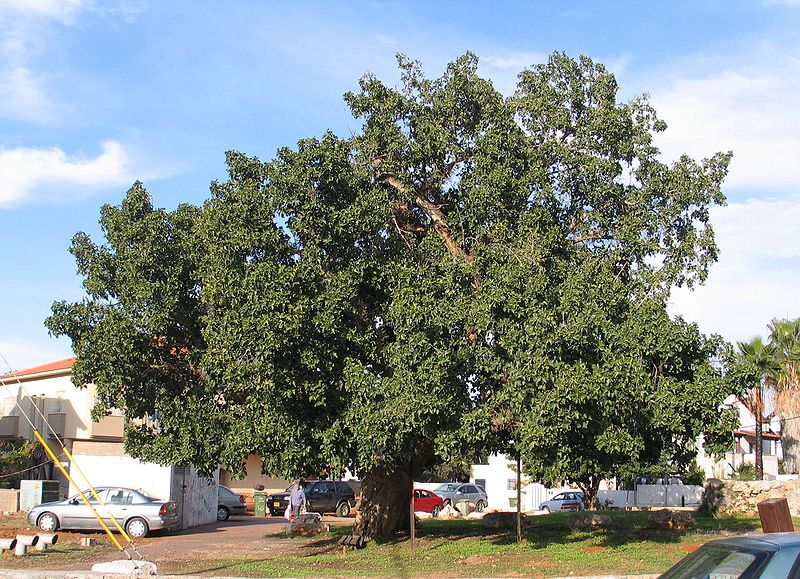
In today’s gospel we meet Zacchaeus a short guy with deep pockets, who was rich and may have gotten that way by collecting taxes for the enemy, the Roman occupiers. I say may have, cause who knows he may have inherited that money or got it some other way. The gospel just says --- this little guy was a tax collector, and was rich. So Zacchaeus saw a crowd gathering around Jesus and something must have made him want to find out who that person was, and what they were saying. So Zacchaeus climbs up in a sycamore tree to get a better look. Now Sycamore trees are not just any old tree, they can grow quite large having a dense round crown of spreading branches and they were cultivated almost exclusively by ancient Egyptians. The Egyptians of course once enslaved the Jewish people, these are the same Egyptians that Moses, Miriam and their people escaped from --- I don’t think the author of this gospel accidentally tells us that the tree was a Sycamore, that was intentional. The author perhaps wanted those reading this gospel to notice, wants us to draw a connection between this rich, tax collector in the tree, and those old, distant oppressors of the people. But there’s also another interesting thing about the sycamore --- the leaves are heart shaped.
Perhaps this tree climbing was 1st century surveillance, but instead of remaining inconspicuous Jesus notices Zaccheus and seems to know him, calling him down and inviting himself over to his house. Maybe Jesus likes a little luxury every once in a while, I mean as scripture says, “foxes have holes, and the birds have nests, but the Son of Man has no place to lay his head” --- or perhaps Jesus knows just how significant, how transformative being in relationship with this wealthy guy might be. The grumbling, anxiety and fear begins immediately though --- the crowd doesn’t like what they see, Jesus the revolutionary teacher, the rumored savior and redeemer of the people becoming pals with that rich traitor. Jesus doesn’t seem to be bothered by the whispering, they’ve barely spent much time together, haven’t even made it to Zaccheaus’ pad, but Zaccheaus hears the crowds horror at the sight of Jesus hanging out with him that he is moved to give away half of his possessions, to the poor; and pay back four times as much to those he may have defrauded.
This is one amazing story. But what does this story mean to us here at St. Cyprian’s Episcopal Church on the corner of Turk & Lyon Street as we approach our 50th anniversary in this spot? How are we to respond to this story of strange friendship? Who are the Zaccheaus’ we as the body of Christ may be called upon to befriend? Or are we up in the tree just checking things out, minding our own business ---- how do we respond to Jesus taking an interest in us, are we prepared to be transformed, to give away stuff so that salvation may be experienced in our house? Or are we like that poor crowd anxious, offended, and scared by the very thought of a relationship between that rich traitor and Jesus? What transformative things might happen in our lives, homes and communities if we open ourselves to unexpected blessings. What might happen if St. Cyprian’s more and more became a community who befriended tax collectors, traitors and sinners, what might happen if we instead of watching Jesus from the sidelines, accepted his intrusion into our homes, what shift would happen in us, could we be in for a similar redistribution of our resources ? What if instead of being hostile to the surprising friendship between that rich guy and Jesus, we too sought out our opposites --- if we’re doing okay financially, what would it be like for us to individually become friends with someone who is struggling? Or if we’re having a tough time, what if we made a point of really trying to become part of the life of a rich person? In a city like this one, there’s plenty of wealthy and plenty of poor to befriend --- perhaps those of us in the middle need to make some introductions?
From where I stand, up here in this pulpit --- I see a lot of befriending going on, a lot of new relationships emerging, I’ve actually been quite surprised by who has taken a look at our little community, sometimes checking us out from above, sometimes from below, and on the side --- my prayer is that we together can become more and more comfortable being joyfully surprised by these new friendships, open to whatever might happen in our hearts and in the hearts of others --- ready to experience salvation in our lives and community.
He entered Jericho and was passing through it. A man was there named Zacchaeus; he was a chief tax collector and was rich. He was trying to see who Jesus was, but on account of the crowd he could not, because he was short in stature. So he ran ahead and climbed a sycamore tree to see him, because he was going to pass that way. When Jesus came to the place, he looked up and said to him, “Zacchaeus, hurry and come down; for I must stay at your house today.” So he hurried down and was happy to welcome him.All who saw it began to grumble and said, “He has gone to be the guest of one who is a sinner.” Zacchaeus stood there and said to the Lord, “Look, half of my possessions, Lord, I will give to the poor; and if I have defrauded anyone of anything, I will pay back four times as much.” Then Jesus said to him, “Today salvation has come to this house, because he too is a son of Abraham. For the Son of Man came to seek out and to save the lost.”
Love changes things, relationships change things, paying attention, doing uncomfortable things like making friends with supposed enemies, and inviting yourself over to strangers houses changes things, showing hospitality, opening ourselves up to other people’s perspectives changes things.
Now we may not be particularly interested in being changed, we may not really be into the idea of being transformed by the Spirit, or climbing out of our trees, or making surprising friendships --- that’s okay but we’re not going to be saved by fear, we’re not going to be saved by our self protective illusions of security, we are not going to be saved by minding our own business and ignoring what’s going on around us.
In today’s gospel we meet Zacchaeus a short guy with deep pockets, who was rich and may have gotten that way by collecting taxes for the enemy, the Roman occupiers. I say may have, cause who knows he may have inherited that money or got it some other way. The gospel just says --- this little guy was a tax collector, and was rich. So Zacchaeus saw a crowd gathering around Jesus and something must have made him want to find out who that person was, and what they were saying. So Zacchaeus climbs up in a sycamore tree to get a better look. Now Sycamore trees are not just any old tree, they can grow quite large having a dense round crown of spreading branches and they were cultivated almost exclusively by ancient Egyptians. The Egyptians of course once enslaved the Jewish people, these are the same Egyptians that Moses, Miriam and their people escaped from --- I don’t think the author of this gospel accidentally tells us that the tree was a Sycamore, that was intentional. The author perhaps wanted those reading this gospel to notice, wants us to draw a connection between this rich, tax collector in the tree, and those old, distant oppressors of the people. But there’s also another interesting thing about the sycamore --- the leaves are heart shaped.
Perhaps this tree climbing was 1st century surveillance, but instead of remaining inconspicuous Jesus notices Zaccheus and seems to know him, calling him down and inviting himself over to his house. Maybe Jesus likes a little luxury every once in a while, I mean as scripture says, “foxes have holes, and the birds have nests, but the Son of Man has no place to lay his head” --- or perhaps Jesus knows just how significant, how transformative being in relationship with this wealthy guy might be. The grumbling, anxiety and fear begins immediately though --- the crowd doesn’t like what they see, Jesus the revolutionary teacher, the rumored savior and redeemer of the people becoming pals with that rich traitor. Jesus doesn’t seem to be bothered by the whispering, they’ve barely spent much time together, haven’t even made it to Zaccheaus’ pad, but Zaccheaus hears the crowds horror at the sight of Jesus hanging out with him that he is moved to give away half of his possessions, to the poor; and pay back four times as much to those he may have defrauded.
This is one amazing story. But what does this story mean to us here at St. Cyprian’s Episcopal Church on the corner of Turk & Lyon Street as we approach our 50th anniversary in this spot? How are we to respond to this story of strange friendship? Who are the Zaccheaus’ we as the body of Christ may be called upon to befriend? Or are we up in the tree just checking things out, minding our own business ---- how do we respond to Jesus taking an interest in us, are we prepared to be transformed, to give away stuff so that salvation may be experienced in our house? Or are we like that poor crowd anxious, offended, and scared by the very thought of a relationship between that rich traitor and Jesus? What transformative things might happen in our lives, homes and communities if we open ourselves to unexpected blessings. What might happen if St. Cyprian’s more and more became a community who befriended tax collectors, traitors and sinners, what might happen if we instead of watching Jesus from the sidelines, accepted his intrusion into our homes, what shift would happen in us, could we be in for a similar redistribution of our resources ? What if instead of being hostile to the surprising friendship between that rich guy and Jesus, we too sought out our opposites --- if we’re doing okay financially, what would it be like for us to individually become friends with someone who is struggling? Or if we’re having a tough time, what if we made a point of really trying to become part of the life of a rich person? In a city like this one, there’s plenty of wealthy and plenty of poor to befriend --- perhaps those of us in the middle need to make some introductions?
From where I stand, up here in this pulpit --- I see a lot of befriending going on, a lot of new relationships emerging, I’ve actually been quite surprised by who has taken a look at our little community, sometimes checking us out from above, sometimes from below, and on the side --- my prayer is that we together can become more and more comfortable being joyfully surprised by these new friendships, open to whatever might happen in our hearts and in the hearts of others --- ready to experience salvation in our lives and community.
Sunday, September 05, 2010
Sunday Sermon @ Grace - Whole Self In
Jesus the home wrecker, anti-consumerist, varsity coach invites us to jump into the deep end of the pool.
Peace!
You can listen to Sunday's sermon here.
Subscribe to:
Posts (Atom)